The Blue Republic
Every empire needs the road. None may own it.
Blue Republic setting profile
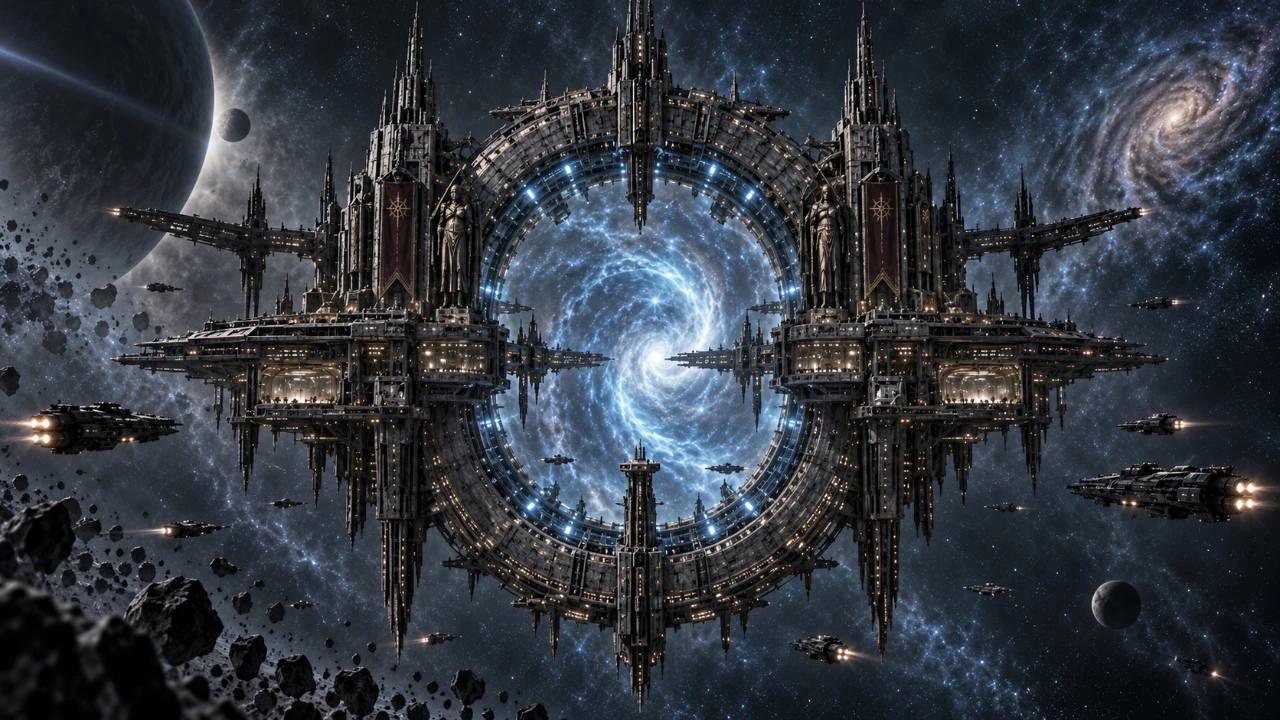
Canon at a glance
- Archive category
- factions
- Capital
- Asterion Gate-Station
- Population
- Approximately 70–90 million
- Government
- Independent commercial republic
- Territory
- Asterion Gate, surrounding habitats, service moons and minor extraction outposts
- Strategic position
- Junction of the Meridian Run and Outer Reach Passage
Overview
A small independent commercial republic built directly into Asterion Gate, surviving between major powers because every empire prefers a neutral crossroads to one owned by a rival.
A civilization welded into a gate
Asterion Gate is pre-Fall Varanthi construction, older than every surrounding state. It was never abandoned. Docking arms attach to ancient ribs, habitats occupy former maintenance cavities, shipyards line the external ring and commercial decks fill old service structures. Gate, city, fortress, shipyard, customs station and nation have become inseparable.
The two roads
Asterion controls the intersection of the Meridian Run and the Outer Reach Passage, not either route in its entirety. The Meridian Run connects inward toward Sol, core markets and Hiigaran space. The Outer Reach Passage leads toward frontier colonies, mercenary territories, salvage systems and industrial worlds. Interruptions lasting days raise prices; a shutdown lasting weeks can cripple frontier economies.
Why blue?
The old Blue Dock Authority wore blue pressure coats to distinguish civilian traffic officials from security and foreign soldiers. During the Gate Crisis, three neighboring powers tried to land temporary protection forces. Dockworkers, tug crews, customs officers, engineers and local security resisted together, marking controlled sections with blue emergency lights. The traffic authority became a government, and the blue work coat became a symbol of citizenship.
Divided government
The Civic Assembly represents permanent residents. The Transit Chamber represents dock districts, shipping guilds, freight operators and industrial communities. The Gate Authority controls navigation, authentication, transit safety and ancient infrastructure. The Republic Guard handles external defense and emergency security. None ordinarily commands the others. Decisions are slow, but buying control of the entire government is difficult.
The Blue Compact
No foreign power may permanently station strategic forces in the gate complex. Warships may transit, escorts may dock, mercenaries may refuel and damaged fleets may request sanctuary, under monitoring and strict departure windows. Hostile fleets use separate anchorages on opposite sides of the gate. Weapons stay cold; targeting locks are hostile action, and unauthorized boarding launches are attacks on the Republic.
Why neutrality survives
A major power could eventually conquer Asterion, but damaging the gate would devastate trade and occupation would provoke its rivals. Every empire prefers an independent crossroads to one controlled by an enemy. The Republic survives between competing ambitions rather than through military superiority.
The Republic Guard
Republic doctrine defends infrastructure against a larger attacker. Hardened anchorages, concealed missile platforms, mine-laying tugs, traffic sensors and gantries converted to armored barriers exploit known docks, maintenance cavities and sensor shadows. Restricted approaches turn the gate complex into the naval equivalent of an urban battlefield.
The Blue Fleet
The small fleet centers on escort frigates, compact destroyers, customs cutters, missile boats, electronic-warfare vessels and modified civilian tugs. Traffic-control cruisers are especially important: they coordinate thousands of civilian and military contacts. The aim is to prevent a rapid seizure, not to win an arms race or conquer territory.
A service economy
Cheap transit encourages ships to keep using Asterion. Wealth comes from repair, fuel, insurance, warehousing, crew replacement, customs arbitration, freight transfer, data authentication, contract brokerage, medical treatment and salvage adjudication. Traders, crews, contractors, diplomats, spies, mercenaries and refugees fill the station.
The Blue Markets
Asterion hosts one of the largest legal salvage exchanges outside the major states. Seraph biological material, unregistered Varanthi authentication cores, Carrion Choir specimens, uncontained autonomous military intelligences and certain strategic gate components are banned. Illegal markets beneath the legal exchanges trade such goods at much higher prices.
House von Hjertstedt
House Banners have protected Asterion convoys for generations. Justicars arbitrate salvage disputes because their rulings are difficult to buy. The Republic respects House von Hjertstedt professionalism while rejecting House ownership. Precise compliance with transit law earns House ships unusual privileges, and the Republic may quietly call Vintergard when unfamiliar dangers appear.
The major powers
The Terran Federal Protectorate values routes independent of Imperial infrastructure. The Hiigaran Restoration considers the Republic competent but questions its stewardship model. The Throne Imperium recognizes neutrality while periodically submitting historical jurisdiction claims, which the Republic politely archives. The Garooth covet the concentration of ships, metal and fuel. For the parasitic Seraph Throne, the flow of hosts, identities, vessels, codes and command authorities makes infiltration especially dangerous.
The old gate
Republic engineers control Asterion without fully understanding it. Deep corridors and machinery spaces remain inaccessible; systems sometimes activate or receive power unexpectedly. Once every few decades a deep cycle stops traffic, darkens the internal ring and moves ancient mechanisms. The gate then sends an authentication request toward coordinates absent from current maps. Nobody has answered so far.
The central contradiction
Neutrality lasts only while the powers agree that an open road is preferable to a conquered one. General war could force Asterion to choose a side, threatening the very basis of the Republic. Its citizens repeat: “Keep the road open. Keep the flags outside.”
Connected entries
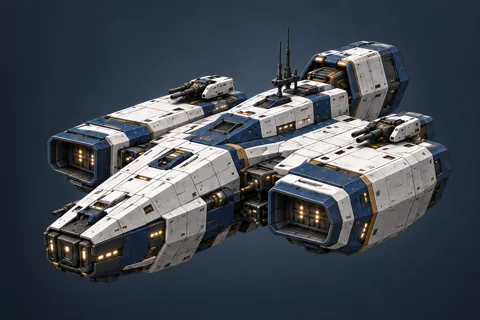 Hiigaran Restoration
A restoration power claiming stewardship through ancestry, recovered infrastructure and control of relay corridors.
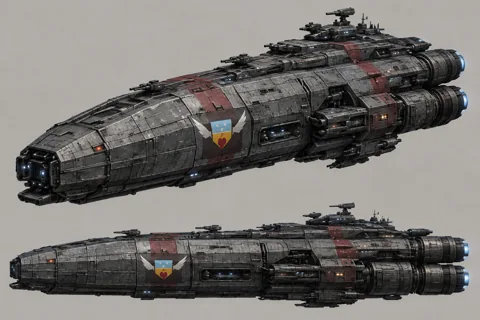 House von Hjertstedt
A sovereign mercenary House whose fleets protect a hidden civilization. Its power rests on conduct, civilian protection and the industrial depth of Vintergard.
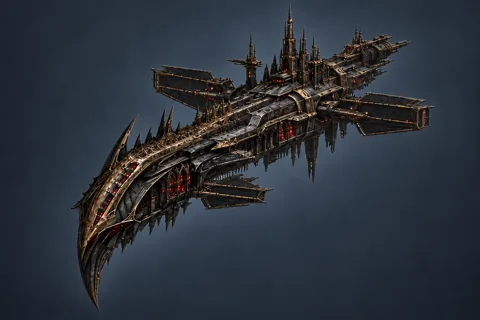 Seraph Throne
Ancient parasites using human hosts to seize identities, command structures and control of the gate network.
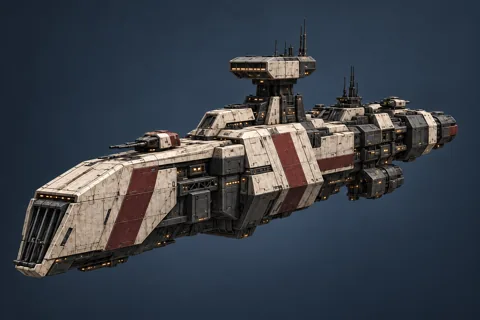 Throne Imperium
An imperial power grounding authority in sacred law, hierarchy and control of strategic infrastructure.
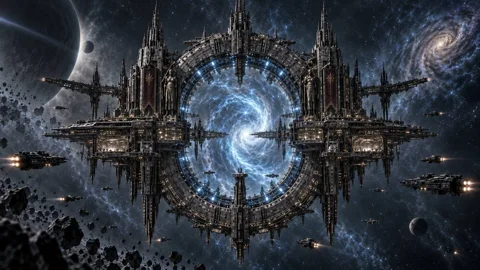 Asterion Gate
The capital of The Blue Republic is simultaneously a gate, city, fortress, shipyard and customs station. Settlements and service districts are built into the ancient Varanthi ring itself.